Partitioning Strategies: Managing Massive Data Volumes
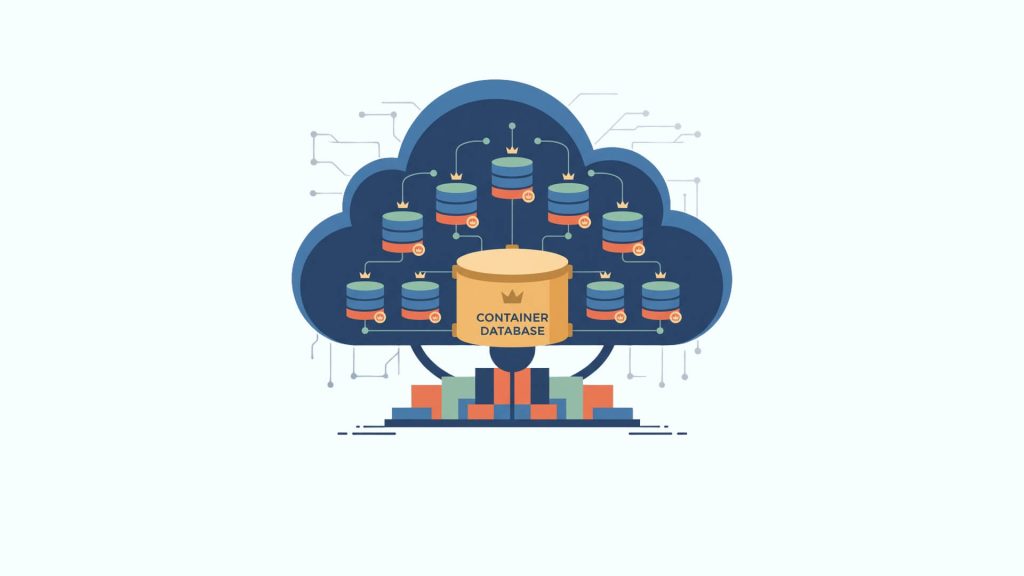
When data grows into the multi-terabyte range, performance problems stop being “issues” and become structural limitations. Oracle Partitioning is the mechanism that lets you bend huge tables to your will — faster scans, efficient maintenance, and predictable performance under load. If you’re managing high-volume OLTP, hybrid workloads, or any sizable warehouse, partitioning isn’t optional. It’s the foundation of storage design.
This guide distills the partitioning landscape into a practical blueprint. You’ll get clarity on each partition type, how composite strategies really behave, and the operational tricks that separate clean designs from messy ones.
Core Principles
- Partition for access paths; not for “neatness”;
- Design to prune; reducing scanned partitions is the real win;
- Use composite layouts; single-level partitioning rarely scales.
Partition Types: Range, List, Hash, Interval, Reference
Partitioning is more than chopping tables into pieces. Each method defines how Oracle navigates and eliminates data during execution. Choosing the correct method is the first strategic decision in any partitioning initiative.
Range Partitioning
The workhorse of time-based systems. Data is segmented by date ranges (daily, monthly, quarterly). Efficient for sliding windows, historical purges, and chronological workloads.
- Best for event streams and time-series workloads;
- Pairs naturally with partition pruning;
- Easy to automate with interval expansion.
List Partitioning
Partitions based on discrete values — regions, business units, categories. Great when your access patterns depend on specific attributes rather than time.
- Ideal for lookup-driven workloads;
- Supports list subpartitioning for complex structures.
Hash Partitioning
Perfect for evenly distributing I/O across partitions. Hashing avoids data skew and improves concurrency for large fact tables.
- Excellent for high-concurrency inserts;
- Works well as a subpartitioning method under range.
Interval Partitioning
Automatically generates future range partitions based on a defined interval. This eliminates manual partition management and keeps sliding windows clean.
- Great for event/time-based data arriving continuously;
- Enables predictable automation in large warehouses.
Reference Partitioning
Partitioning dependent tables based on their parent’s partition key. This is mandatory for clean referential integrity in large schemas.
- Eliminates partition mismatch between parent-child tables;
- Crucial for data warehouse star-schema consistency.
Composite Partitioning for Complex Scenarios
Real systems rarely fit a single partitioning model. Composite partitioning blends two strategies — such as range-hash or list-range — to match both access patterns and maintenance needs.
Range-Hash
Most common composite pattern. Range partitions divide data by time; hash subpartitions distribute each time slice evenly.
- Improves insert concurrency;
- Optimizes pruning and parallelism;
- Standard approach for fact tables.
Range-List
Useful when time and discrete categories both matter. Example: sales data partitioned by month, then subpartitioned by region.
- Perfect for federated reporting;
- Supports partition-wise joins with dimension tables.
List-Hash
Useful when category-driven slicing is essential and even distribution still matters.
- Great for domain-heavy datasets with unpredictable volumes;
- Balances I/O hotspots.
Composite layouts prevent the classic pitfalls: skewed partitions, slow scans, and overloaded hot ranges. The right combination ties access patterns to physical structure.
Partition Pruning & Partition-Wise Joins
Partitioning is only valuable if Oracle can skip unnecessary segments. Pruning is the core performance gain — and if you don’t design for pruning, you’re just slicing tables for decoration.
Partition Pruning
When query predicates match partition boundaries, Oracle avoids scanning irrelevant segments. This cuts I/O dramatically.
- Ensure predicates align with partition keys;
- Avoid complex expressions that hide pruning potential;
- Use histograms only when necessary.
Partition-Wise Joins
Oracle can join tables partition-by-partition, minimizing shuffling and boosting parallel execution throughput.
- Requires matching partition keys and boundaries between tables;
- Ideal in star-schema and reporting architectures;
- Delivers predictable high-parallelism scaling.
If pruning and partition-wise joins don’t happen automatically, your design needs a rethink.
Online Partition Operations & Maintenance
Massive tables demand maintenance at scale. Online operations eliminate downtime risks and keep data continuously available. Oracle Partitioning excels here.
Key Online Operations
- Split: Divide a large partition into smaller ones;
- Merge: Combine partitions as historical data ages;
- Move: Relocate partitions between tablespaces without blocking;
- Exchange: Swap data into partitions without load operations.
Online operations keep your SLAs intact while giving you flexibility to evolve your structure over time.
Partition Exchange Loading (PEL) for Data Warehouses
Partition Exchange Loading is the fastest, cleanest, most reliable bulk-load mechanism Oracle offers. You load data into a staging table (with matching structure) then swap it into a live partition in a single metadata operation.
Why It’s Critical
- Zero redo cost: Exchange doesn’t generate redo like massive inserts;
- No locking impact: The swap is instant;
- Predictable ETL: Ideal for nightly, hourly, or streaming warehouse loads;
- Rollback safety: If your data is wrong, swap it back.
If your ETL is still inserting millions of rows directly into fact tables, you’re burning CPU and throwing away operational simplicity.
Automatic Data Optimization (ADO) & Heat Map
Modern storage needs lifecycle intelligence. ADO and Heat Map automate movement between high-performance and low-cost storage tiers based on actual data usage.
Heat Map
Tracks read/write activity at segment and block level. No guesswork — real workload telemetry.
ADO Policies
Automate storage transitions over time:
- Compress cold partitions automatically;
- Move old data to cheaper storage tiers;
- Archive inactive segments;
- Purge based on retention rules.
Combined, ADO and Heat Map keep storage costs predictable and performance reserved for what’s actually hot.
End-to-End Design: Building a Scalable Partitioning Architecture
Partitioning is a structural design decision. When you choose the right layout and align it with workload patterns, the gains are enormous: simpler maintenance, faster queries, cleaner ETL, and smoother growth.
Your Implementation Blueprint
- Choose range-based layouts for time-driven workloads;
- Use hash subpartitions for concurrency and distribution;
- Align predicates to maximize pruning and partition-wise joins;
- Adopt partition exchange for all heavy ETL;
- Enable Heat Map for lifecycle intelligence;
- Apply ADO policies to control storage costs at scale.
Final Word
Partitioning isn’t just a performance trick — it’s the architectural backbone of every high-volume Oracle system. With the right combination of partition types, pruning strategy, and lifecycle automation, you build an environment that stays fast, clean, and maintainable no matter how large the data grows. If you’re serious about scalability, this blueprint is where you start.